Australian Museum
Real dinosaur skeletons and life-size models.
Visit the website ↗
Lulu loves to ask "how?" and "why?". Here are her favourite ways to find out about dinosaurs, plants and the world around you.
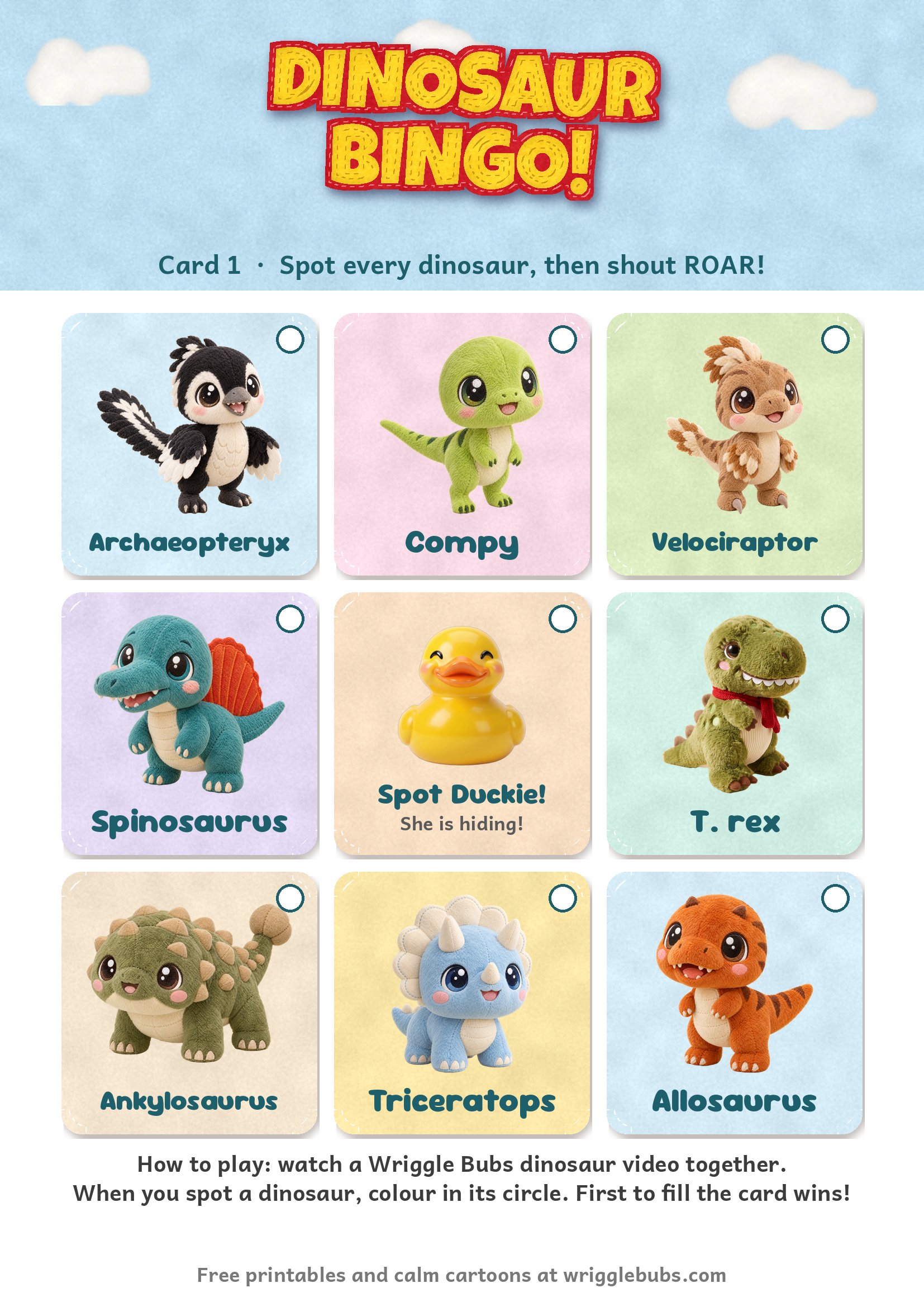
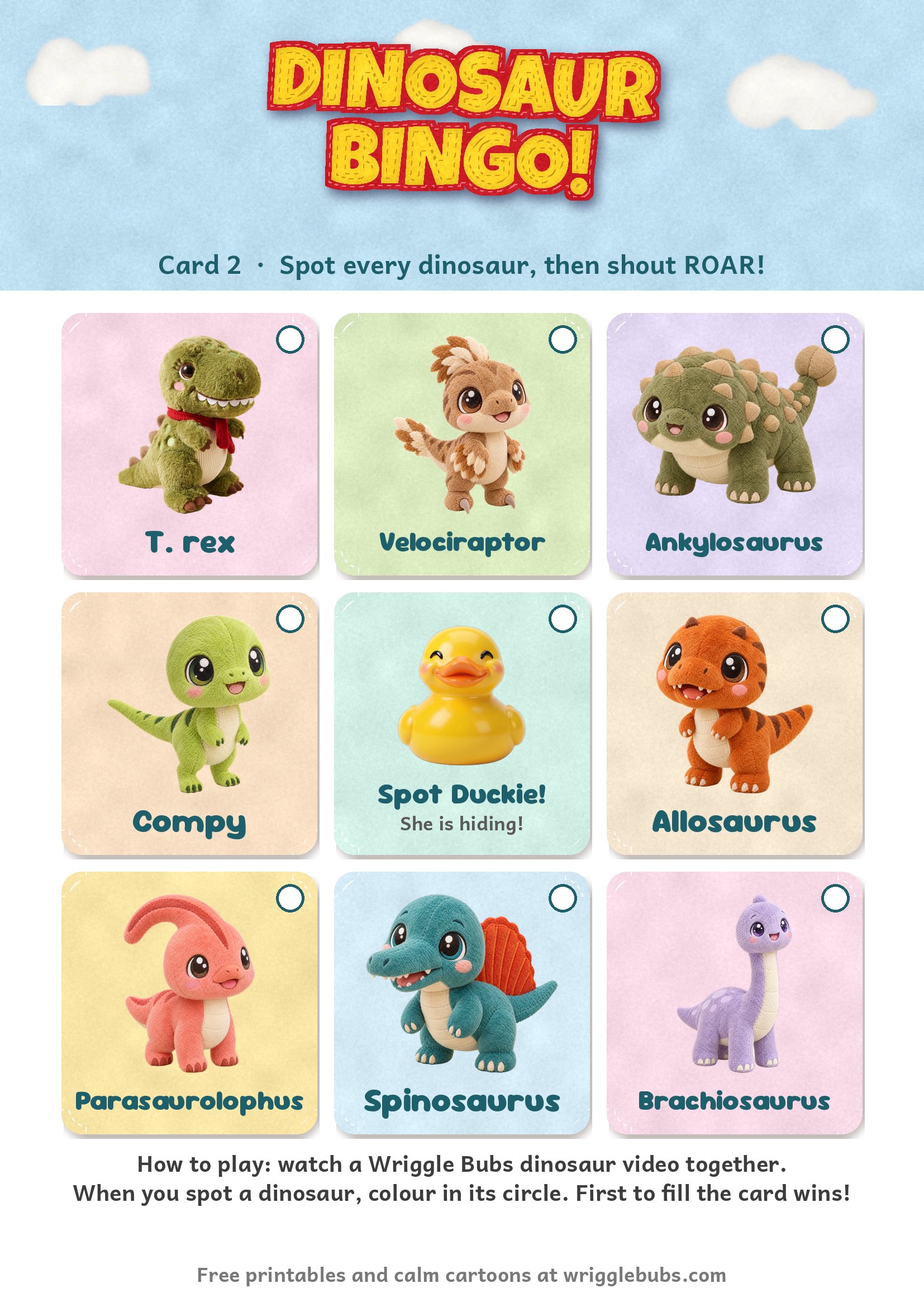
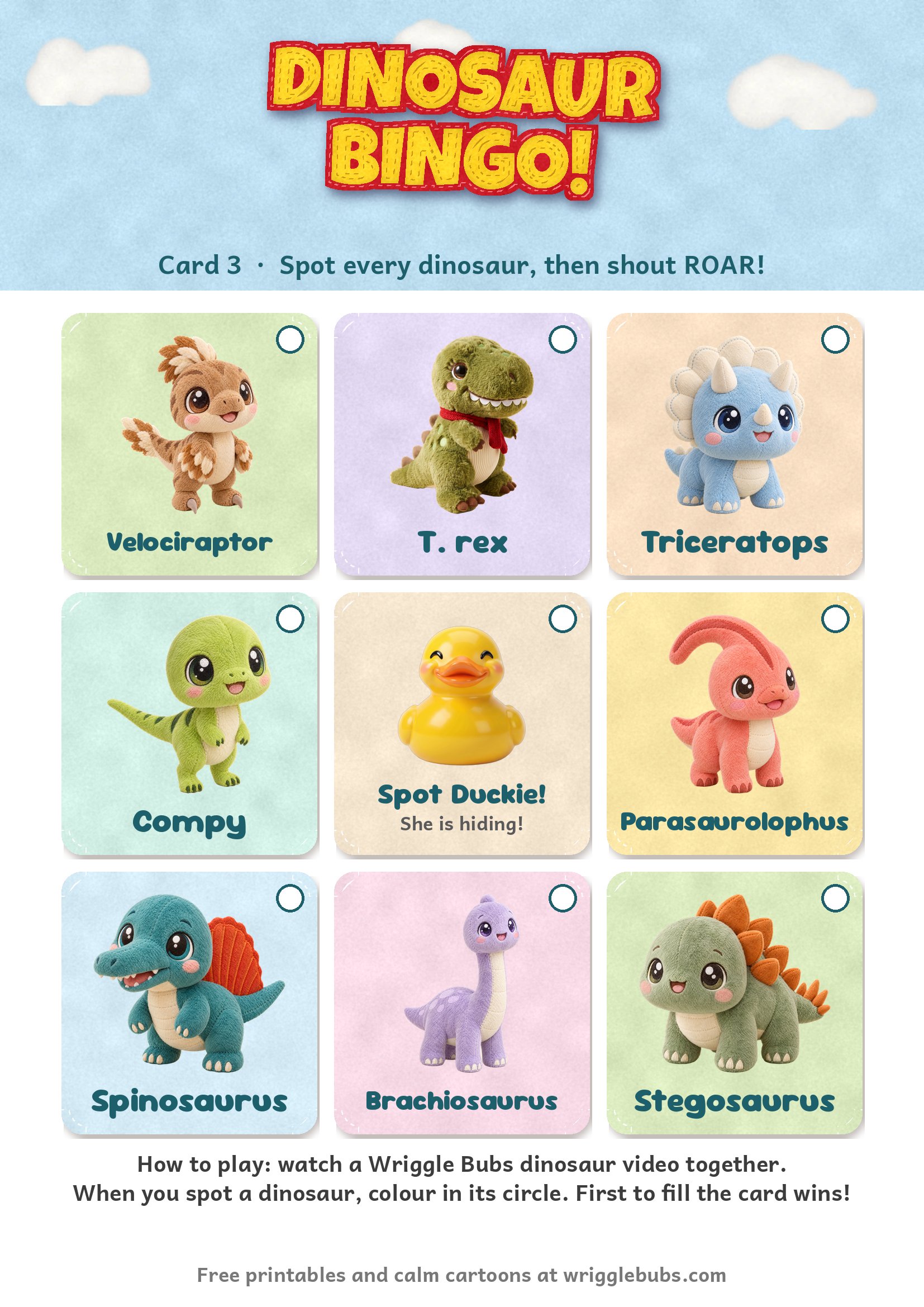
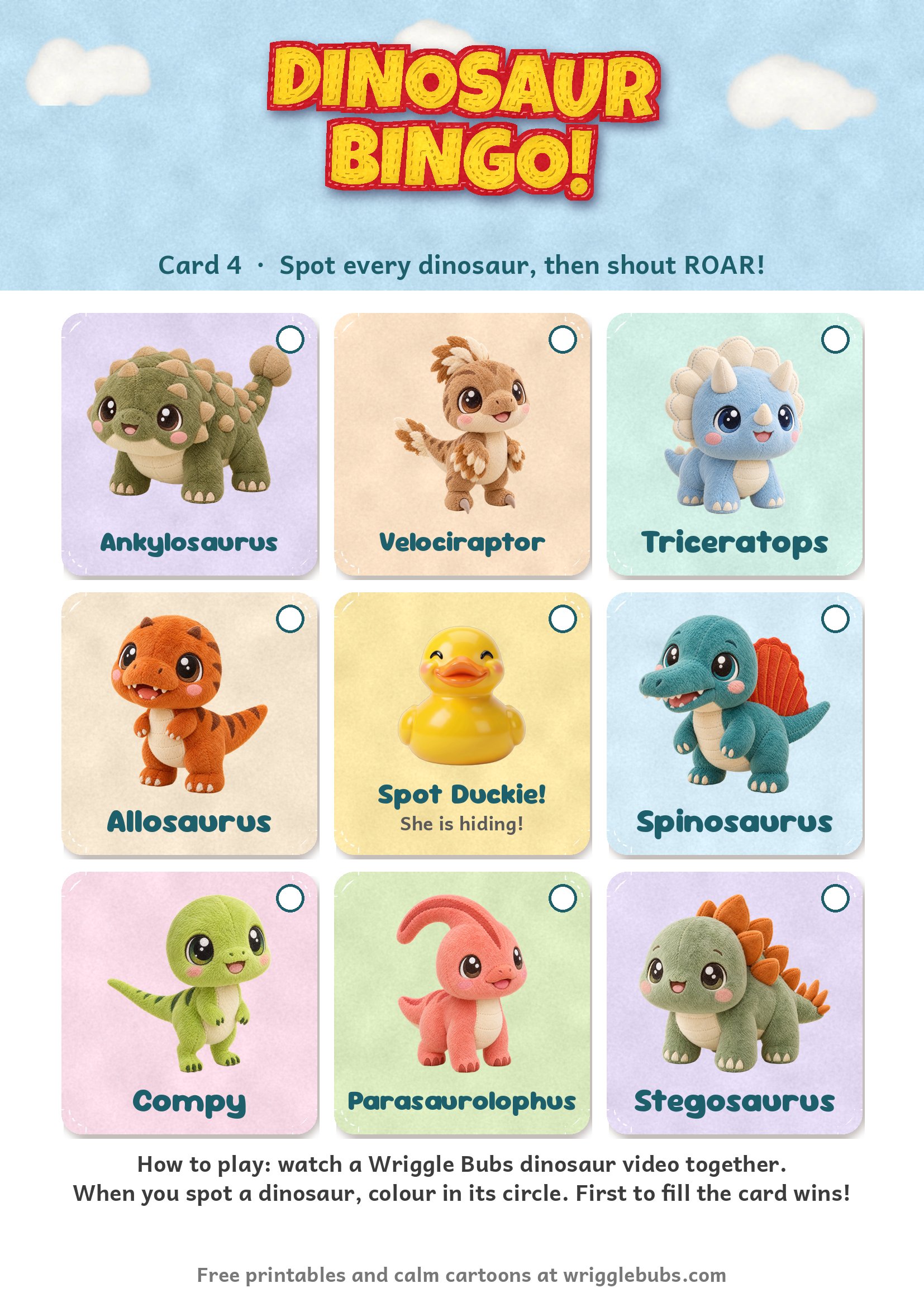
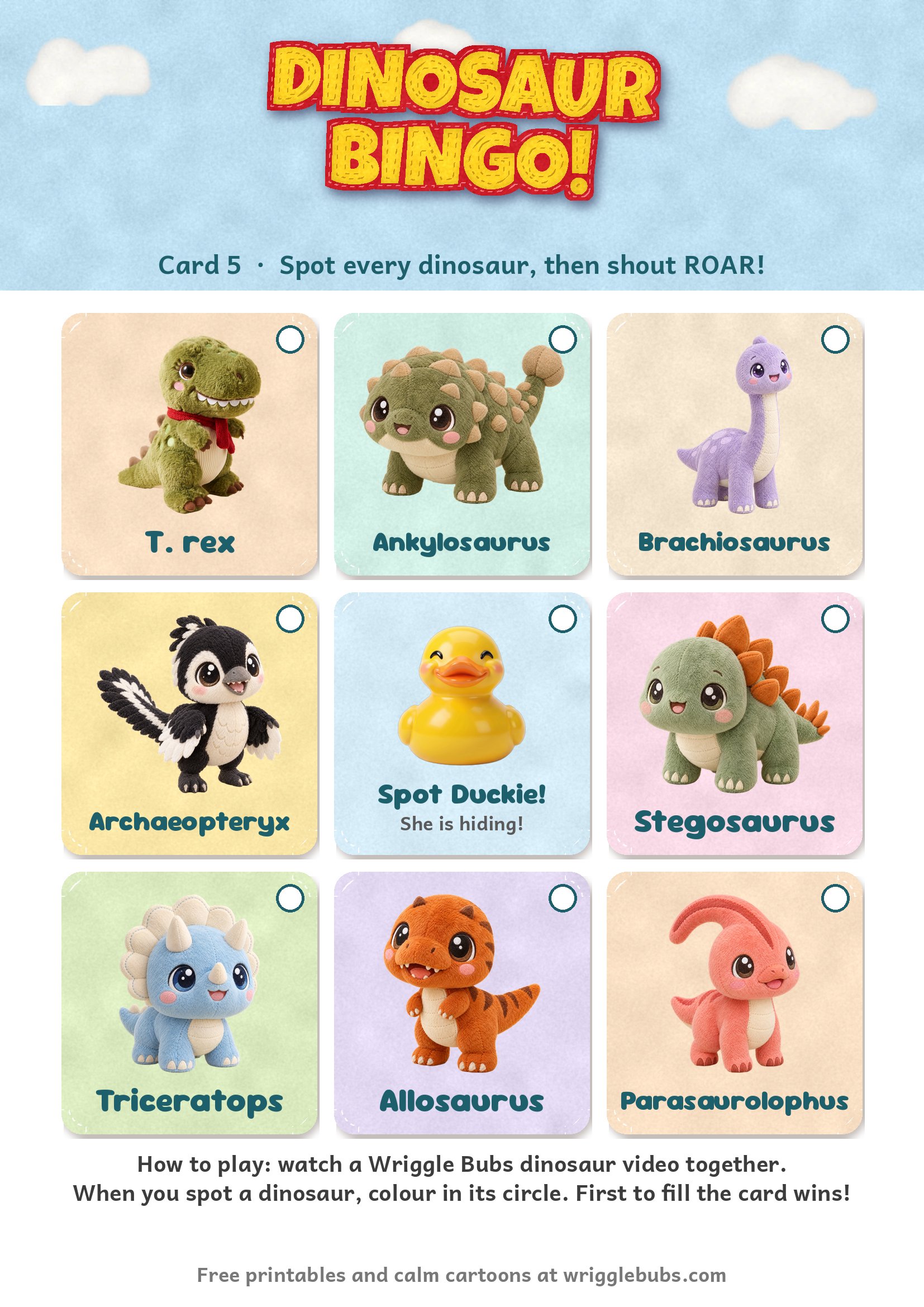
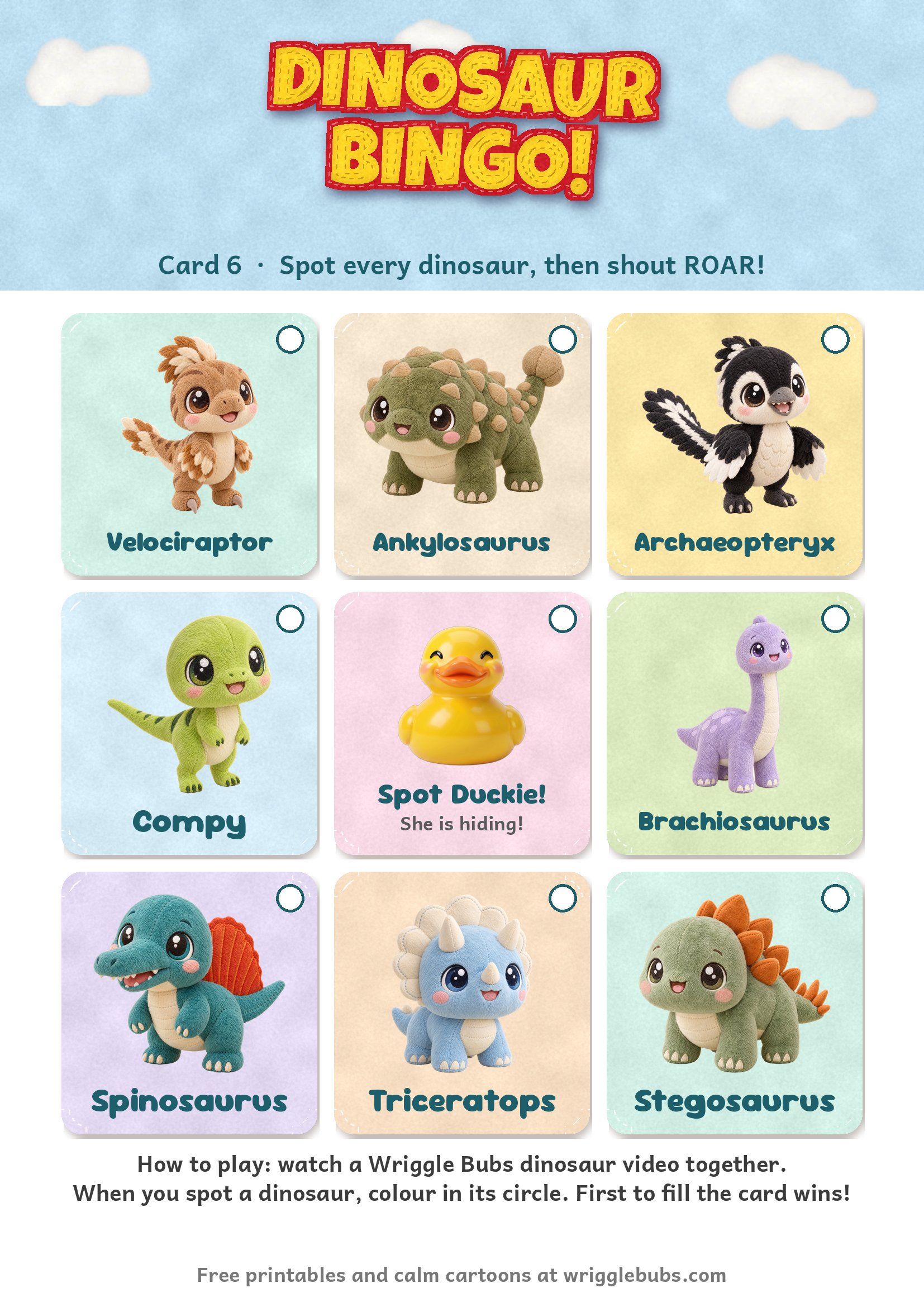
Six different cards, each with eight of our dinosaurs and Duckie hiding in the middle. Watch a Wriggle Bubs dinosaur video together. The first to spot every dinosaur on their card shouts ROAR!
Print one card for each player. Every card is different.
When you see a dinosaur from your card, colour in its little circle.
Spotted them all, and Duckie too? Shout ROAR! You win.
 ▶ Watch
Who is tallest? Watch the dinosaurs measure up.
 ▶ Watch
Listen carefully. Who made that enormous roar?
 ▶ Watch
Make your guess, then watch the dinosaur face-off.
Its arms were tiny, but its bite was one of the strongest of any land animal ever.
Its name means "three-horned face". Count the horns: one, two, three!
It had big plates along its back and spikes on its tail.
It could reach leaves at the very top of tall trees.
It had a tall sail on its back and loved to be near water.
Compsognathus was one of the smallest dinosaurs, about the size of a chicken.
The Wollemi pine, ginkgo, tree ferns and ferns all grew when dinosaurs were alive, and you can still find them today.
Lulu's list of places to see dinosaur skeletons, fossils and footprints. Always check opening times before you go.
Real dinosaur skeletons and life-size models.
Visit the website ↗Life-like models, full skeletons and skulls.
Visit the website ↗A T. rex skeleton and thousands of fossils.
Visit the website ↗A fossil lab and life-size dinosaurs in the outback.
Visit the website ↗At low tide, real dinosaur footprints appear on the rocks by the sea.
Find out more ↗Many museums have a fossil or two, and many botanic gardens grow dinosaur plants. Ask what they have!
Dinosaur plants →Simple, curious activities with things you already have. Always with a grown-up nearby.
Mix flour, salt and water into a dough. Press a toy dinosaur's feet or a leaf into it, and leave it to dry. You made a fossil!
T. rex was about 12 metres long. Use big steps or a ball of string outside. How many of you would fit?
Put a leaf under paper and rub over it with the side of a crayon. Can you find a fern?
Fold a paper plate in half and glue on paper triangles for its back plates.
Draw round your foot. Then draw a giant dinosaur footprint next to it. Whose is bigger?
Like Lulu, ask one big question today. "Why did dinosaurs have tails?" Find out together.